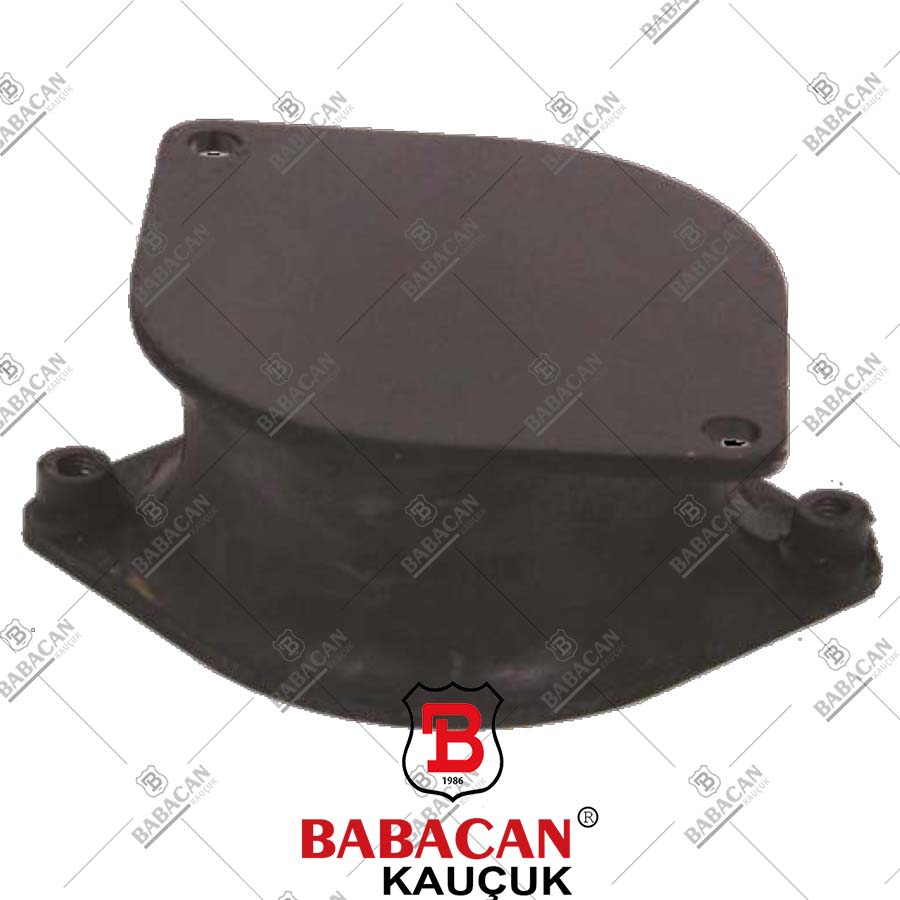
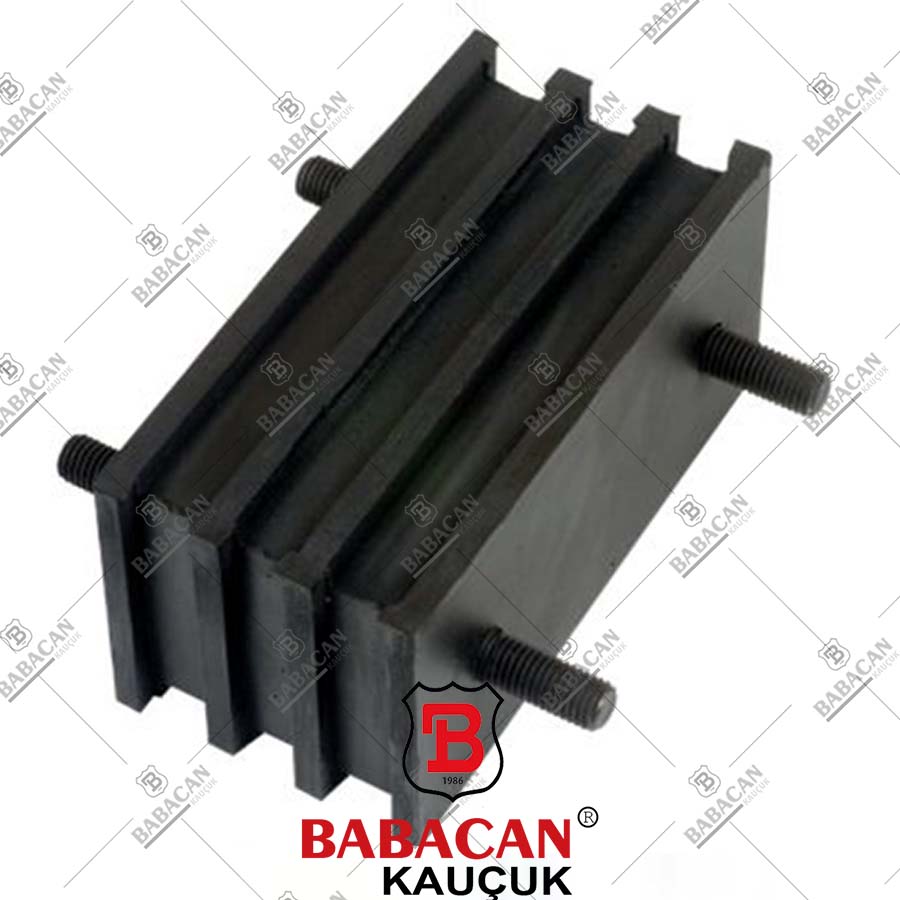
Engineering Overview: 4812111046 for DYNAPAC CC 5000/6000
The 4812111046 (alternative part number: 04812111046) represents a critical engineered rubber buffer designed specifically for DYNAPAC CC 5000/6000 vibratory compactor systems. This precision-manufactured vibration damper utilizes advanced polymer science to deliver exceptional energy absorption characteristics essential for protecting heavy construction machinery from destructive oscillation forces. Engineered by Babacan Rubber, Turkey's premier industrial rubber component manufacturer, this rubber buffer incorporates decades of materials engineering expertise combined with state-of-the-art manufacturing processes.
When deployed in DYNAPAC CC 5000/6000 compaction equipment, this vibration isolation component effectively decouples mechanical assemblies from high-amplitude forces generated during soil compaction operations. The advanced rubber formulation exhibits optimal viscoelastic properties, converting destructive kinetic energy into dissipated heat while maintaining structural integrity under continuous cyclic loading. This engineering approach significantly extends equipment operational lifespan while enhancing operator safety and comfort during prolonged use in demanding construction applications.
Material Science & Compound Engineering
Advanced Polymer Formulation
The 4812111046 rubber buffer utilizes a proprietary synthetic rubber compound specifically engineered for extreme-duty vibration damping applications. Our materials engineering team has developed this formulation through extensive research into polymer chain structures, cross-linking densities, and filler reinforcement systems. The resulting compound exhibits exceptional resilience characteristics with Shore A hardness values optimized for maximum energy absorption efficiency.
Unlike conventional rubber components, this vibration damper incorporates carefully selected reinforcing agents including carbon black particles and silica compounds that enhance tear resistance while maintaining flexibility across operational temperature ranges. The polymer matrix demonstrates outstanding compression set resistance, typically maintaining greater than 90% recovery even after extended exposure to sustained compressive loads exceeding 2 MPa.
Temperature Performance Range
Operational capability maintained from -45°C to +85°C with less than 15% modulus variation
Dynamic Stiffness Characteristics
Frequency-dependent stiffness optimized for 15-50 Hz vibration isolation efficiency
Chemical Resistance Profile
Excellent resistance to hydraulic fluids, diesel fuel, ozone exposure, and UV radiation
Fatigue Life Performance
Tested beyond 5,000,000 compression cycles without visible cracking or property degradation
Molecular Structure Optimization
The rubber compound employed in the 4812111046 buffer features carefully controlled molecular weight distribution and cross-link density achieved through sulfur vulcanization processes. This molecular architecture provides the ideal balance between elastic recovery and damping coefficient, ensuring that vibration energy is efficiently dissipated rather than transmitted through the mechanical structure. The polymer network demonstrates minimal creep under sustained loading, maintaining dimensional stability throughout the component's operational lifecycle.
Performance Under Operational Loads
Dynamic Load Response Characteristics
During typical DYNAPAC CC 5000/6000 compaction operations, the 4812111046 rubber buffer experiences complex multi-axial loading conditions including compressive forces, shear stresses, and tensile loads. Our engineering analysis demonstrates that this component effectively manages peak impact forces exceeding 8,000 N while maintaining structural integrity. The rubber element exhibits controlled non-linear stiffness behavior, becoming progressively stiffer under increasing loads to prevent excessive deflection that could result in metal-to-metal contact.
Laboratory testing conducted according to ISO 4664 standards confirms that this vibration damper achieves transmissibility ratios below 0.25 at resonant frequencies, effectively isolating more than 75% of vibrational energy. This performance characteristic translates directly to reduced mechanical stress on critical drivetrain components, extended bearing service life, and substantially decreased maintenance requirements for heavy compaction equipment. Compared to alternative rubber mount designs, this configuration provides superior isolation across broader frequency ranges.
Vibration Isolation Efficiency Analysis
Comprehensive frequency response analysis demonstrates that the 4812111046 rubber buffer achieves maximum isolation effectiveness between 20-45 Hz, precisely corresponding to the dominant excitation frequencies generated by DYNAPAC CC 5000/6000 vibratory mechanisms. This matched performance ensures optimal protection of sensitive hydraulic systems, electronic components, and operator platforms from harmful oscillation forces.
Environmental Durability Testing
Accelerated aging protocols confirm that this rubber buffer maintains functional properties even after extended exposure to harsh environmental conditions typical of construction sites worldwide. Thermal cycling tests between temperature extremes, combined with continuous UV exposure and ozone atmosphere testing, demonstrate less than 20% property degradation over simulated 10-year service periods. This exceptional durability eliminates premature component failure and reduces total cost of equipment ownership.
Manufacturing Process & Quality Assurance
Precision Molding Technology
Babacan Rubber's production of the 4812111046 component employs computer-controlled compression molding systems that ensure dimensional accuracy within ±0.3mm tolerances. Each production cycle utilizes precisely metered raw material charges loaded into temperature-controlled molds maintained at optimal vulcanization temperatures between 160-175°C. Curing cycle parameters including time, temperature, and pressure are continuously monitored through SCADA systems, ensuring consistent cross-link density throughout every manufactured component.
Post-molding deflashing operations utilize cryogenic techniques that eliminate excess material without introducing surface defects or compromising dimensional accuracy. Each rubber buffer undergoes automated visual inspection using machine vision systems capable of detecting surface irregularities smaller than 0.5mm, ensuring that only components meeting stringent cosmetic standards proceed to final packaging. This manufacturing approach, combined with our expertise in producing BOMAG rubber components, guarantees consistent OEM-equivalent quality.
Comprehensive Testing Protocols
Quality assurance procedures for the 4812111046 rubber buffer include multiple validation stages:
- Dimensional Verification: Coordinate measuring machine (CMM) inspection of critical dimensions including mounting hole positions, overall height, and diameter specifications
- Hardness Measurement: Shore A durometer testing at multiple locations to verify uniform compound curing and material consistency
- Compression Testing: Force-deflection characterization using universal testing machines to confirm compliance with performance specifications
- Visual Quality Inspection: Trained technicians examine each component for surface finish quality, absence of voids, and proper mold fill
- Batch Traceability: Comprehensive documentation linking each production batch to specific raw material lots and process parameters
Installation Considerations for Optimal Performance
Mounting Surface Preparation
Proper installation of the 4812111046 rubber buffer requires careful attention to mounting surface conditions. All mating surfaces must be thoroughly cleaned to remove rust, scale, oil contamination, or paint residue that could prevent proper load distribution across the rubber element. Surface flatness should be verified using straightedge measurement, with deviations not exceeding 0.2mm across the contact area. Any surface irregularities should be corrected through machining or grinding operations before component installation.
Mounting bolt specifications must be strictly adhered to, with torque values applied according to equipment manufacturer's specifications. Under-torquing results in inadequate preload and potential component movement during operation, while over-torquing causes excessive compression of the rubber element, reducing its effective service life. We recommend using calibrated torque wrenches and following a cross-pattern tightening sequence to ensure uniform load distribution across all mounting points.
Operational Break-In Period
Following installation, the 4812111046 rubber buffer benefits from a controlled break-in procedure during initial equipment operation. We recommend operating the DYNAPAC CC 5000/6000 compactor at reduced engine speeds for the first 2-3 hours of service, allowing the rubber compound to achieve thermal equilibrium and seat properly within the mounting assembly. This break-in period permits stress relaxation within the polymer matrix, optimizing long-term dimensional stability and performance characteristics.
Service Life & Replacement Indicators
Under normal operating conditions, the 4812111046 rubber buffer typically provides reliable service for 2,500-3,500 equipment operating hours, equivalent to approximately 3-5 years in standard construction applications. However, actual service life varies significantly based on operational intensity, environmental exposure, and maintenance practices. Equipment operators should conduct periodic visual inspections during routine maintenance intervals, checking for signs of rubber deterioration including:
- Surface cracking or checking patterns indicating polymer degradation from UV or ozone exposure
- Visible compression set exceeding 25% of original component height under no-load conditions
- Rubber separation from bonded metal inserts or delamination between material layers
- Abnormal equipment vibration levels suggesting compromised damping performance
- Excessive rubber softening or hardening beyond specified durometer range
Proactive replacement of vibration damping components before complete failure prevents secondary damage to expensive mechanical systems and ensures continuous equipment availability. Maintaining detailed service records tracking installation dates and operating hours facilitates data-driven maintenance scheduling, optimizing component replacement timing and minimizing unplanned downtime costs.
Babacan Rubber Manufacturing Capabilities
As Turkey's foremost producer of industrial rubber components, Babacan Rubber operates an ISO 9001:2015 certified manufacturing facility equipped with advanced rubber processing technology. Our production capabilities span the entire manufacturing value chain, from raw material compounding through final component testing and packaging. This vertically integrated approach ensures complete quality control and enables rapid response to customer requirements.
Our engineering team collaborates directly with heavy equipment manufacturers and aftermarket distributors worldwide, providing technical support for application-specific component selection and custom product development. With extensive experience producing vibration isolation components for HAMM, BOMAG, Caterpillar, and numerous other equipment brands, we offer customers proven expertise backed by decades of successful field performance.